
Newborn Photo Poses: A Complete Safety and Style Guide
Those first few weeks with your newborn pass in a beautiful blur of tiny fingers, sleepy yawns, and precious moments you wish you could freeze in time. Professional newborn photography captures this fleeting stage, and the magic happens through carefully crafted newborn photo poses that showcase your baby's delicate features while prioritizing their safety and comfort. Whether you're a parent preparing for your upcoming session or simply curious about how these stunning images come to life, understanding the art and science behind newborn posing can help you appreciate the expertise involved in creating heirloom-quality photographs.
The Foundation of Safe Newborn Posing
Safety always comes first in newborn photography. Every pose you see in a professional portfolio requires meticulous planning, proper training, and constant vigilance throughout the session.
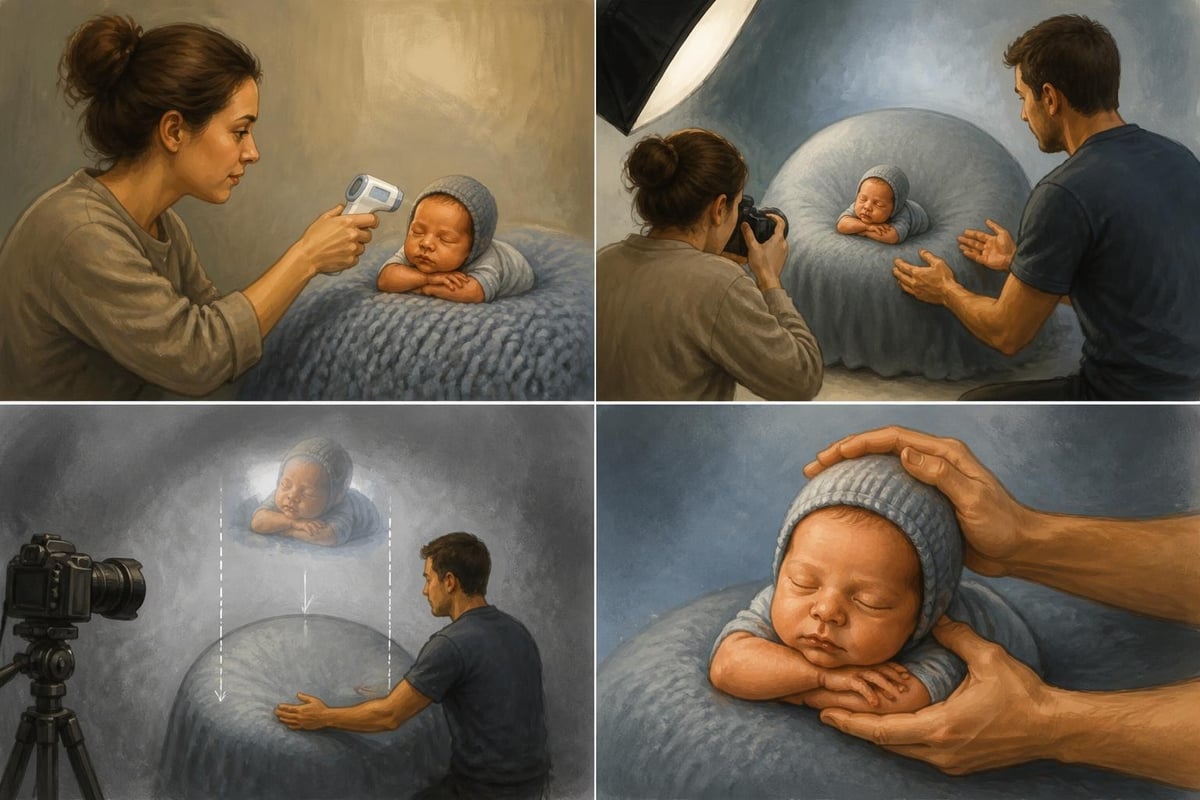
Professional newborn photographers understand that babies cannot support their own heads, regulate their body temperature effectively, or communicate discomfort in obvious ways. These limitations shape every decision made during a session. The studio environment must be kept warm (typically between 78-85°F) to prevent hypothermia, as research on neonatal thermoregulation demonstrates how quickly newborns can lose body heat during the first weeks of life.
Essential Safety Protocols
Before attempting any newborn photo poses, photographers implement several non-negotiable safety measures:
- Spotter hands: A parent or assistant keeps hands within inches of the baby at all times, even if not visible in frame
- Temperature monitoring: Regular checks ensure the baby stays warm and comfortable
- Time limits: Sessions are paced around feeding and comfort, never rushed
- Composite techniques: Complex-looking poses often use digital merging of multiple safe shots
- Professional training: Certification in newborn safety and posing techniques
The AAP’s Safe Sleep image gallery provides excellent visual references for safe infant positioning that photographers adapt for studio work.
Classic Newborn Photo Poses That Never Go Out of Style
Some poses have remained beloved for decades because they beautifully showcase a newborn's tiny proportions and peaceful expression. As a CT newborn photographer with over 12 years of experience, I've seen these timeless poses bring tears of joy to countless parents.
The Taco Pose
This simple yet stunning pose curls the baby on their side with knees tucked toward their chest, hands positioned near their face. The taco pose mimics the position babies naturally assume in the womb, making it comfortable and soothing for most newborns.
The photographer gently positions the baby on a soft surface, supporting the head and ensuring the neck remains in a neutral position. Parents often love this pose because it captures the baby's entire profile while highlighting their button nose and rosebud lips.
The Froggy Pose (Always Composited)
One of the most iconic newborn photo poses shows the baby propped on their hands with their bottom in the air, resembling a tiny frog. Here's what parents need to know: this pose is always created through composite photography.
| Actual Process | What Parents See |
|---|---|
| Baby lies on tummy with hands under chin | Baby appears to support own weight on hands |
| Parent's hands support head and body | No visible support in final image |
| Multiple safe shots taken | Seamless single image |
| Images merged in editing | Professional, polished result |
No newborn has the strength to hold this position independently, and attempting it without proper support would be dangerous. Professional Connecticut newborn photographers take several images with different hand positions, then digitally blend them to remove all visible support.
Side-Lying Serenity
This gentle pose positions the baby on their side with one arm tucked under their head and the other relaxed along their body. It's one of the safest and most comfortable newborn photo poses, requiring minimal manipulation.
The natural positioning makes it ideal for:
- Newborns who resist being moved
- Capturing peaceful, sleeping expressions
- Highlighting the baby's delicate features
- Creating a calm, serene mood
Props and Accessories in Newborn Posing
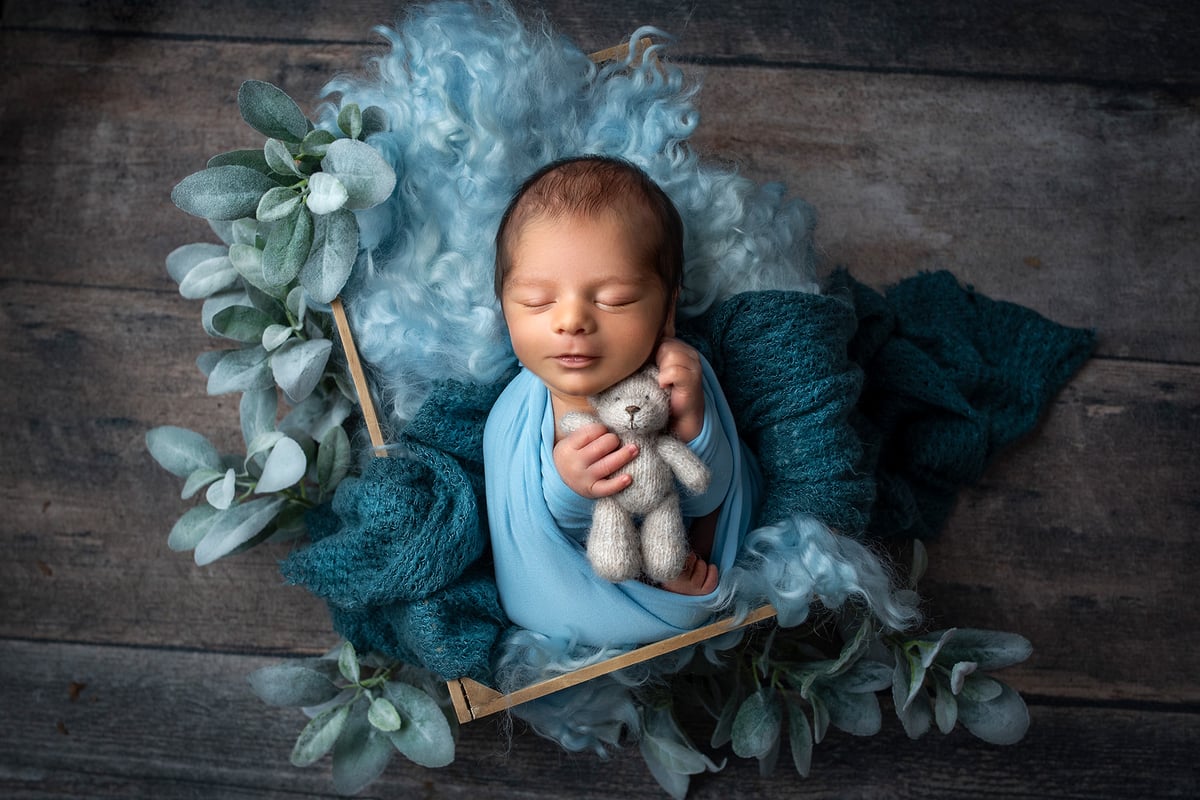
The right props enhance newborn photo poses without overwhelming the star of the show. Connecticut newborn photography often incorporates carefully selected items that add texture, color, and interest while maintaining focus on your baby.
Choosing Safe Props
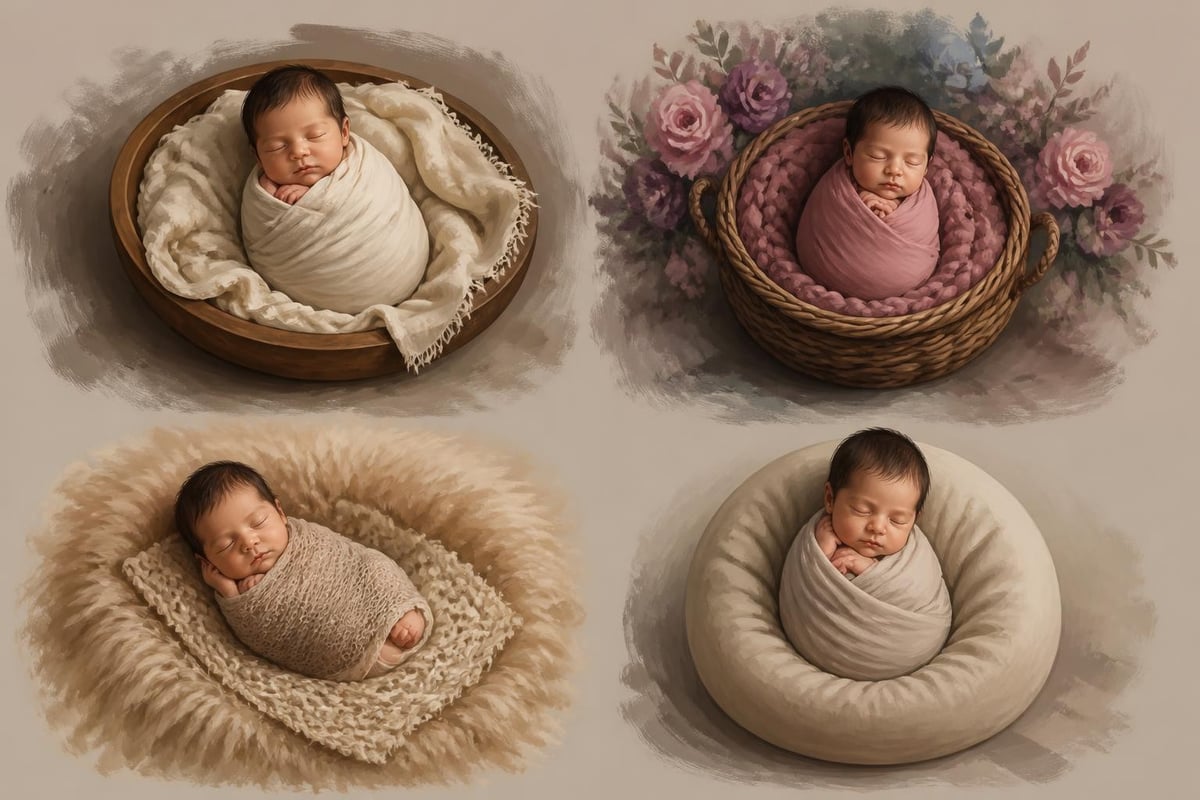
Professional photographers invest in high-quality props designed specifically for newborn use. Baskets, bowls, and beds must have sturdy construction, smooth edges, and appropriate sizing for a baby who weighs just 5-10 pounds.
Wraps and fabrics serve multiple purposes in newborn sessions. They help regulate temperature, add visual interest, and can strategically drape to create the illusion of poses that would otherwise require uncomfortable positioning. Temperature management guidelines emphasize the importance of maintaining ambient warmth, which these textiles support.
Popular prop categories include:
- Wooden bowls and vintage crates
- Woven baskets with cotton or fur padding
- Soft knit wraps in neutral and jewel tones
- Headbands, bonnets, and tiny crowns
- Organic materials like moss, branches, and flowers (kept at safe distance)
Creating Cohesive Setups
When planning newborn photo poses with props, photographers consider the entire composition. The backdrop, layered fabrics, and prop colors should complement without competing.
For families booking a newborn photography session, discussing color preferences and style ahead of time helps create a cohesive look that matches your nursery or home décor. Whether you prefer rustic neutrals, soft pastels, or bold jewel tones, the posing and prop selection adapts to your vision.
Parent and Sibling Poses with Newborn
Family connection shots capture the relationships that matter most. These newborn photo poses incorporate parents and siblings, creating images that tell the story of your growing family.
Parent-Baby Poses
The most touching images often show the scale difference between adult hands and tiny newborn fingers, or capture the way a parent gazes at their sleeping child with pure wonder.
- The Bird's Eye View: Parents hold baby at chest level while photographer shoots from above, capturing the protective circle of arms
- Hands and Feet: Close-up comparison showing baby's tiny foot in parent's palm
- Chest-to-Chest: Baby sleeps on parent's bare chest, ideal for dads bonding with newborns
- The Wrap: Parent's arms encircle a wrapped baby, faces close together in profile
These poses work beautifully for CT newborn photography sessions because they feel natural and authentic rather than overly styled or forced.
Sibling Photography Tips
Photographing newborns with siblings requires patience, flexibility, and often some creative problem-solving. Toddlers and young children have limited attention spans and may feel uncertain about the new family dynamic.
Successful sibling poses often include:
- Seated poses where the older child sits securely with baby in lap (always spotted)
- Standing poses where siblings kiss or touch the baby's head gently
- Lifestyle shots capturing genuine interaction and curiosity
- Individual portraits of each child, then composited together for safety
The key to natural-looking sibling shots? Keep sessions short, bring favorite toys or snacks, and celebrate every moment of cooperation, even if it's just a few seconds.
Lifestyle vs. Studio Newborn Photo Poses
The debate between lifestyle and traditional studio newborn photography often comes down to personal preference and the type of memories you want to preserve. Both approaches offer distinct advantages for capturing those early days.
Studio Posing Advantages
Traditional studio newborn photo poses provide the controlled environment necessary for those frame-worthy, magazine-style images. Temperature control, professional lighting, and extensive prop collections allow for creative setups that would be impossible in home environments.
| Studio Benefits | Lifestyle Benefits |
|---|---|
| Precise lighting control | Natural home environment |
| Extensive prop selection | Genuine family moments |
| Temperature-controlled comfort | Pets and personal items included |
| Artistic, heirloom quality | Documentary storytelling style |
| Multiple setups possible | Relaxed, authentic feel |
As a Connecticut newborn photographer, I've found that many families love combining both approaches, starting with artistic studio poses and finishing with cozy lifestyle shots on the family bed or nursery rocker.
In-Home Lifestyle Posing
Lifestyle newborn photo poses capture your baby in the environment where they'll grow up. These sessions prioritize authentic moments over perfection: the way morning light filters through the nursery window, how your baby looks cradled in your arms in the rocking chair, or the first moments big brother meets his new sibling.
The posing in lifestyle sessions feels less posed, if that makes sense. Photographers guide you into flattering positions and watch for beautiful light, but the goal is documenting real life rather than creating fine art compositions.
Timing Your Newborn Session for Best Results
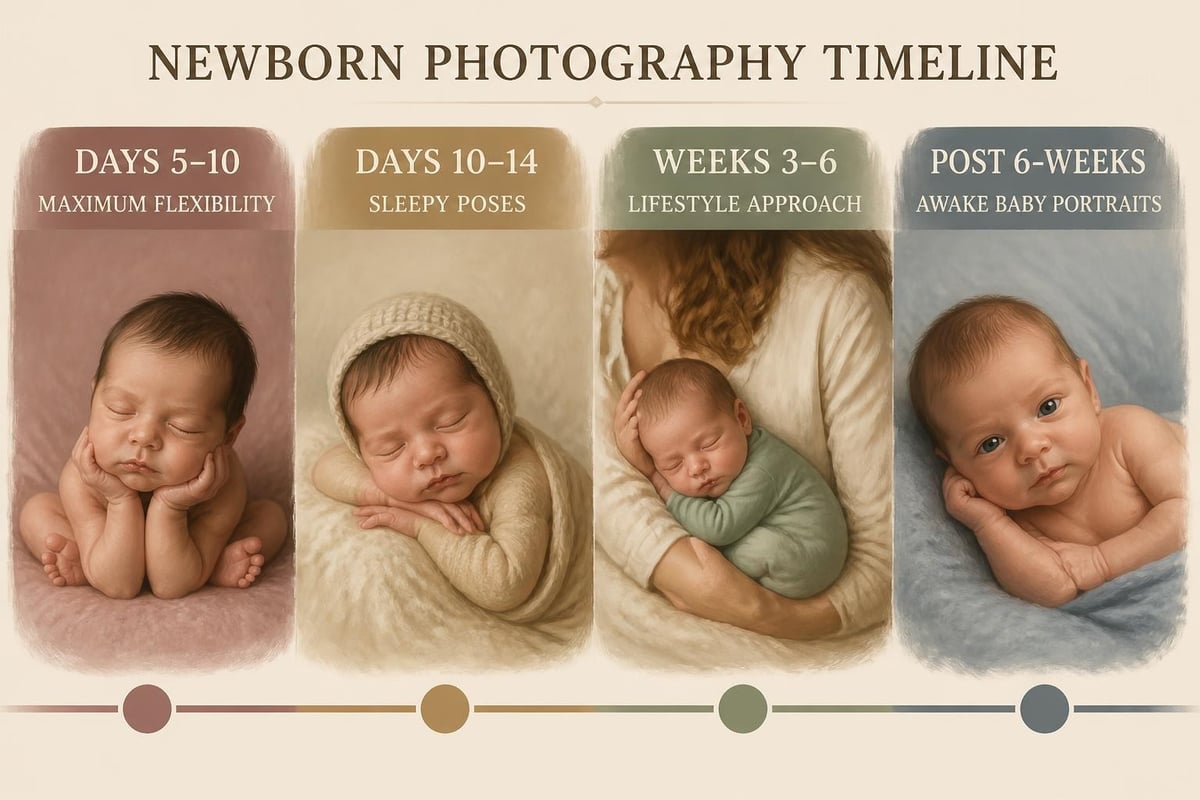
When you schedule your newborn photography matters significantly for achieving those dreamy, curled-up newborn photo poses. The ideal window is between 5-14 days after birth, when babies still naturally curl into womb-like positions and sleep deeply between feedings.
The First Two Weeks
During this early period, newborns retain that fresh, squishy quality and haven't yet developed baby acne or lost their newborn hair. They sleep more soundly and transition between poses more easily without waking.
For Connecticut newborn photography sessions, I recommend booking during your second trimester and penciling in a session date around your due date. Since babies arrive on their own schedule, maintaining flexibility helps ensure we capture your little one during that perfect window.
Scheduling considerations include:
- Baby's feeding schedule (plan session between feedings)
- Time of day when baby naturally sleeps longest
- Parent energy levels and recovery timeline
- Sibling schedules if including other children
- Allow 2-4 hours for a full session with multiple setups
Older Newborns Can Still Be Photographed Beautifully
If you've passed the two-week mark, don't worry. While poses may be slightly different, beautiful images are absolutely still possible. Babies up to six weeks old can be photographed with gorgeous results, though they may be more alert and require different posing approaches.
Older newborns often do well with more lifestyle-oriented sessions that embrace their increasing awareness. The newborn photography CT pricing and session information can help you understand options for different age ranges.
Preparing Your Baby for the Session
Success with newborn photo poses starts with preparation before you even arrive at the studio. Well-fed, comfortable babies cooperate better and give you those peaceful sleeping shots you're dreaming of.
The Day Before and Morning of Your Session
Keep your baby awake for about an hour before the session if possible, and plan to feed them right when you arrive. This encourages them to fall into a deep sleep shortly after the session begins, making posing and transitions smoother.
Dress your baby in loose, comfortable clothing before arrival to avoid red marks or creases on their skin. Skip the tight sleepers with elastic and opt for a simple gown or wrap that can easily be removed without disturbing them.
What to Bring
While professional newborn photography studios provide everything needed for the session itself, bringing a few items from home helps your baby feel comfortable:
- Extra diapers and wipes (sessions can last several hours)
- Feeding supplies (bottles, nursing covers, formula)
- Pacifiers if your baby uses them
- A receiving blanket with your scent
- Backup outfits in case of diaper incidents
- Snacks and drinks for parents and siblings
Understanding Composite Photography in Newborn Posing
Modern newborn photo poses often utilize composite photography techniques that allow for stunning artistic results while maintaining absolute safety. This digital artistry has revolutionized what's possible in newborn photography.
How Compositing Works
Composite photography involves taking multiple photographs with hands supporting different parts of the baby, then digitally blending these images to remove all visible support. The final image shows the baby in a position they could never safely maintain alone.
The process requires:
- Multiple exposures: The photographer captures 3-5 images with hands in different positions
- Consistent positioning: Baby remains in the same spot, only hand placement changes
- Digital blending: Software layers images and masks out hands and props
- Artistic finishing: Skin smoothing, color correction, and detail enhancement
This technique allows for those jaw-dropping newborn photo poses you see across social media, like the froggy pose mentioned earlier, babies appearing to float in clouds, or impossibly balanced positions in hanging baskets.
Why Transparency About Compositing Matters
Ethical newborn photographers are transparent about their use of composite techniques. Parents deserve to know that these images, while absolutely real photographs of their baby, represent artistic interpretations rather than moments captured in a single click.
This honesty also helps set realistic expectations. If you're hoping to recreate poses at home for monthly milestone photos, understanding which positions require professional compositing prevents frustration and potential safety issues.
Cultural and Personal Meaning in Newborn Posing
Newborn photo poses can incorporate cultural traditions, family heritage, and personal meaning that make your images uniquely yours. Connecticut's diverse communities bring rich traditions to newborn photography that go beyond standard studio poses.
Incorporating Heritage and Tradition
Many families want their newborn photography to reflect their cultural background or religious traditions. This might include:
- Wrapping baby in family heirloom textiles or quilts
- Including religious symbols or blessing items
- Incorporating traditional clothing or headwear
- Using colors significant to your culture
- Positioning or posing that aligns with cultural values
As a newborn photographer CT families trust, I love when clients share these meaningful details during our planning conversations. These personal touches transform beautiful photographs into genuine family treasures.
Symbolic Props and Meaningful Items
Beyond cultural items, many parents include objects with personal significance. A grandfather's pocket watch, mother's wedding ring worn as a bracelet, or a hand-knit blanket from a beloved relative add layers of meaning to newborn photo poses.
Sports enthusiasts might include tiny jerseys or team colors. Musicians might incorporate miniature instruments. The possibilities are endless, limited only by safety considerations and what works aesthetically with the overall composition.
Working with Your Newborn Photographer
The relationship between photographer and family significantly impacts the success of your session. Finding a Connecticut newborn photographer whose style matches your vision and whose approach makes you comfortable creates better results and a more enjoyable experience.
Questions to Ask Before Booking
Not all newborn photographers have equal training or safety protocols. Before booking your session, ask:
- What safety training and certifications do you have?
- How do you ensure proper temperature and comfort?
- Do you use composite techniques for certain poses?
- Can we discuss wardrobe and styling before the session?
- What happens if baby is fussy or uncooperative?
- How many images will we receive and in what timeframe?
Professional responses to these questions indicate a photographer who prioritizes both safety and client satisfaction. The families page showcases how experienced photographers work with families across different stages.
Communicating Your Vision
Before your session, gather inspiration images that resonate with you. Pinterest boards, Instagram saves, or magazine clippings help your photographer understand your aesthetic preferences. Be specific about what you like: is it the color palette, the specific pose, the prop styling, or the overall mood?
However, also trust your photographer's expertise. They understand which poses work best for each baby based on flexibility, alertness, and comfort. The images you love online may have taken multiple attempts or worked for a particularly sleepy baby. Your photographer will suggest alternatives if a specific pose isn't working for your little one.
Seasonal Considerations for Newborn Photography
The time of year affects both the practical aspects of your session and creative opportunities for styling newborn photo poses. Each season offers unique advantages for newborn photography Connecticut families can embrace.
Winter Newborns (December-February)
Babies born during Connecticut winters benefit from naturally warm indoor environments. The temperature contrast between cold outdoor air and cozy studio warmth creates an even more comforting atmosphere for sleeping newborns.
Seasonal styling might include:
- Rich jewel tones and deep neutrals
- Knit bonnets and cable-knit wraps
- Faux fur accents and cozy textures
- Evergreen and pinecone natural elements
- Holiday-adjacent (but timeless) styling
Spring Newborns (March-May)
Spring babies arrive as the world awakens, and newborn photo poses can reflect this renewal with fresh, light styling choices. Soft pastels, delicate florals, and garden-inspired setups feel perfectly suited to the season.
Connecticut's unpredictable spring weather makes studio sessions particularly appealing. While outdoor newborn photography isn't recommended due to temperature control needs, bringing spring inside through thoughtful prop selection captures the seasonal spirit safely.
Summer Newborns (June-August)
Summer sessions present temperature management challenges that require extra attention. Photographers must balance keeping the studio warm enough for an undressed newborn while preventing parents and siblings from becoming uncomfortably hot during family poses.
Lighter wraps, minimal clothing, and efficient session pacing help everyone stay comfortable. The extended daylight hours of summer also offer scheduling flexibility for families with older children.
Fall Newborns (September-November)
Autumn provides arguably the most versatile backdrop for newborn photography. The warm, rich color palette of fall translates beautifully to studio work with rust, mustard, sage, and cream tones creating cozy, timeless images.
For maternity photography Connecticut clients who deliver in fall, coordinating maternity session styling with planned newborn photography creates a beautiful narrative arc across your growing family story.
The Art of Awake Newborn Photography
While sleeping baby poses dominate newborn photography portfolios, awake shots capture a different kind of magic. Those alert moments when your baby's eyes are open and taking in their new world create equally precious memories.
Capturing Alert Expressions
Awake newborn photo poses require patience and perfect timing. Photographers watch for that sweet spot after feeding when babies are satisfied, comfortable, and calmly observant before drowsiness sets in.
These images showcase:
- Wide, curious eyes and intent expressions
- Tiny yawns and stretches
- Alert awareness of parents' voices
- Individual personality beginning to emerge
The key is working quickly during these brief windows of calm alertness, typically just 5-10 minutes before baby either falls asleep or becomes hungry again.
Simplified Posing for Awake Babies
Awake newborns won't tolerate the manipulation required for elaborate sleeping poses. Instead, photographers use simple, supportive positions that keep baby comfortable while they're alert: lying on back looking up at camera, cradled in parent's arms, or propped gently on a firm surface.
These poses may seem less artistic than elaborate sleeping setups, but they capture authentic moments of connection and awareness that sleeping poses cannot. Many parents treasure these awake shots just as much as the peaceful sleeping images.
Mastering newborn photo poses requires balancing artistic vision with unwavering commitment to safety, comfort, and patience. Whether you're drawn to classic wrapped poses, lifestyle moments, or elaborate studio setups, the right approach creates heirloom photographs you'll treasure for generations.
About the Author: I'm Amber, and I've been photographing newborns and families for over 12 years. My passion is creating safe, beautiful newborn photography experiences that result in artistic images families cherish forever. Every session is customized to your family's unique style and story.
If you're expecting a baby or recently welcomed your newborn in Connecticut, New York, or Massachusetts, I'd love to create stunning photographs that capture this fleeting stage. One Big Happy Photo, LLC specializes in personalized, luxury newborn photography with safety and artistry at the heart of every session.